
KEYNOTE SPEAKING
I’m not here to predict the future.
I’m here to help a room see how it sees the future — what it’s paying attention to, what it’s ignoring — so that you can have the conversations you need to be having, but aren’t.
Selected organisations I’ve spoken for.






You don’t just get a monologue, what you get is a dialogue.
What I’m asked to speak about
The moment we’re in
Most often I’m asked to open something: a leadership programme, an offsite, the session before the strategy session. I take the room through this moment as it looks to people who pay attention to different things — geopolitics from more than one capital, the AI sceptic and the AI believer, the environmental scientist, the demographer, the philosopher.
Nobody is asked to agree. The aim is to notice which views you had been leaving out, and to start the conversations the rest of your programme needs.
Where the map runs out
Conferences often ask me for trends. What I bring instead is three uncertainties that matter to the people in the room — lately AI, geopolitics and growth — and for each, the question everyone is asking, why it is the wrong shape, and the two better questions underneath it.
The talk turns on the difference between navigating, which you do while the map still works, and reckoning, which you do when it runs out. You leave able to hold your current plan against a wider range of futures and see which one it quietly assumes.
Geopolitics, from more than one side
My doctorate is in Chinese politics and I spent years building a company in China, so I am often asked for geopolitics on its own.
I don’t give a risk briefing. I set out how this moment reads from Washington, from Beijing and from the countries caught between them, and then ask which of those readings your plans take for granted.
The conversation your team isn’t having
Sometimes the brief is one leadership team with a decision on the horizon. Then the talk is the first act. In the second, each person draws the future they are actually planning for, and the team compares maps.
Often the discovery is that well-informed colleagues are carrying two or three different futures into the same plan, and hadn’t said so.
Every talk is built with you. I’ll ask who is in the room, what comes before and after me, and what you hope people are still talking about at the next break.
Formats
Keynote
Thirty to forty-five minutes, plus questions. For a conference, a large gathering or a plenary, where one talk has to anchor the day or change its direction.
Fireside or emcee
An interview on stage, a dinner, a board evening, or hosting the day itself. For rooms where range matters more than rehearsal, and a real exchange is worth more than a speech.
Workshop
Ninety minutes to a full day, for a group small enough to work. I bring the provocation and the structure; the room does the reckoning, in pairs and small groups, and leaves with its own maps rather than mine.
Multi-session arc
A keynote that opens something longer: a day in three blocks, a programme across several months, a leadership team’s year. This is where speaking becomes Foresight or Thought partnership.
The spine of a talk stays constant. What changes is which questions come to the front, the examples and the numbers (yours, not generic ones), the exercise, and often the title, which may end up being yours. I work from one or two briefing calls, send a title and a short synopsis, and at a conference I arrive the day before.
Keynotes and workshops for…
Finance and investment
- BlackRock
- BNP Paribas
- Pictet Asset Management
- Rokos Capital
- Liberty Mutual
- CITIC
- Bank of China
- Development Bank of Japan
Industry, energy and infrastructure
- Saudi Aramco
- Rolls-Royce
- Stena
- IKEA
- UPS
- Unilever
- AtkinsRéalis
- EDP
- Ericsson
Professional services
- BCG
- EY
- DXC Technology
- McCann FitzGerald
- Law Society of Ireland
Government and international institutions
- NATO
- UK Ministry of Defence
- European Patent Office
- Prime Minister’s Office of the UAE
Universities, culture and ideas
- University of Oxford
- Peking University
- National University of Singapore
- British Museum
- Ellen MacArthur Foundation
- TED
- Singularity University
Leadership networks and forums
- YPO
- Entrepreneurs’ Organization
- Forward Institute
- Oslo Business Forum
We had high expectations and needed this day to be amazing. Chris is an absolute rockstar.
We are being flooded with messages saying how amazing your talk was.
Board members still quote his insights, because he made the future feel urgent—and full of possibility.
My TED talk
The search for truth in the social media age, 2019
Nobody books this one for an offsite. It’s a big swing at a big question: why do lies travel so well now? My answer was that the lies aren’t the root problem. Our truths are — simplified for a century, until a blatant lie could look just as strong. We can’t regulate our way back. We have to search for stronger truths together.
I’m still pulling on that thread. It runs through Uncertain by Design, the book I’m writing in the open.
My books
The talks rest on two books: one about the moment, one about the method.
THE INTERNATIONAL BESTSELLER
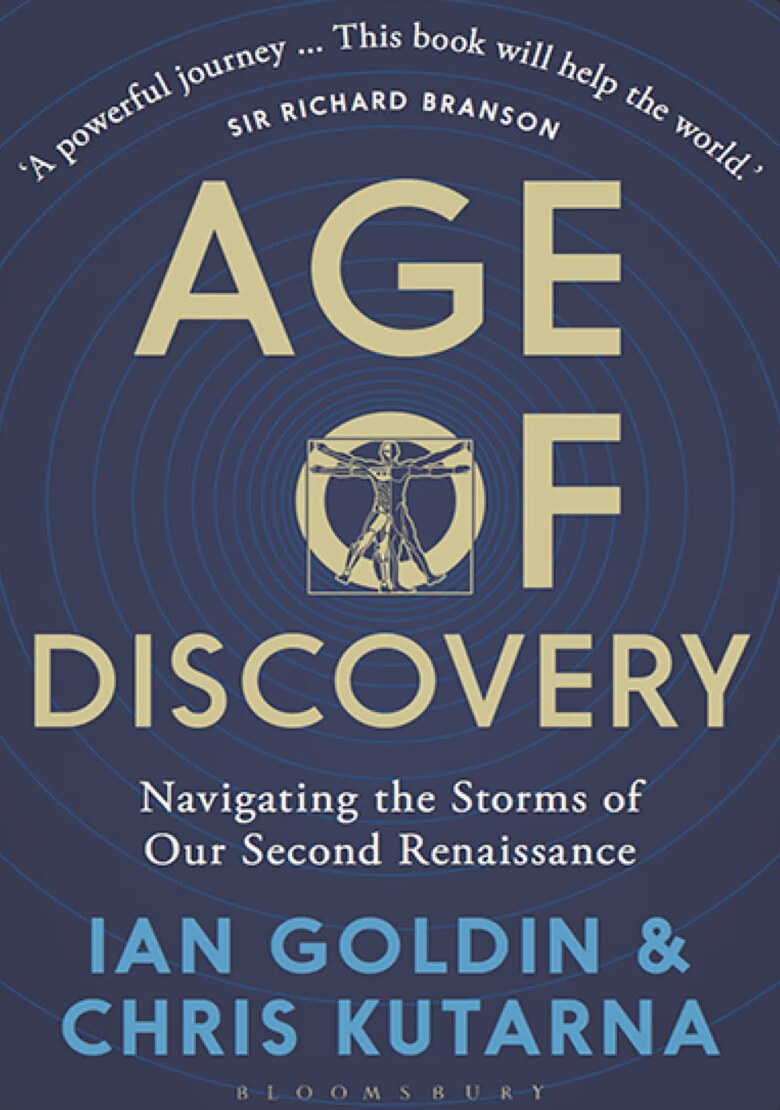
Age of Discovery
Written with Ian Goldin
Now is humanity’s best moment. And our most fragile. The same forces that make big gains possible for some of us deliver big losses to others, and they tangle us together in ways that make everyone vulnerable.
That is the book’s argument: we are living through a second Renaissance, and the first one shows what a moment like this asks of the people living in it. When a room needs distance from the week’s news, this is the history I bring.
Buy on Amazon
Dares to ask and answer essential big questions.
FIELD GUIDE
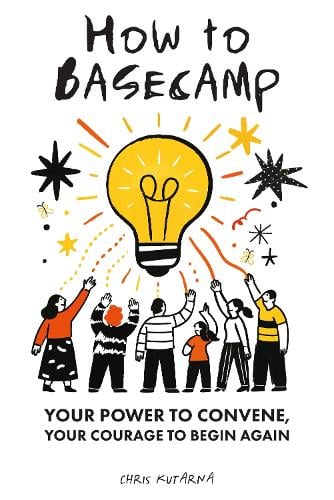
How to Basecamp
My field guide to convening: how to gather people around a question none of them can answer alone, and get them to really listen to each other. It’s drawn from hundreds of Basecamps held around the world, and it’s the method underneath my workshops.
Buy on Amazon
About the guide 
The most useful book I’ve read on getting people to do the impossible—really listen to each other.
How to book
A line or two is plenty: the date, the room, and what you need it to do. I’ll reply within a few days to set up a first call, and we’ll get into the detail there.
Fees depend on the format and how much preparation it needs.